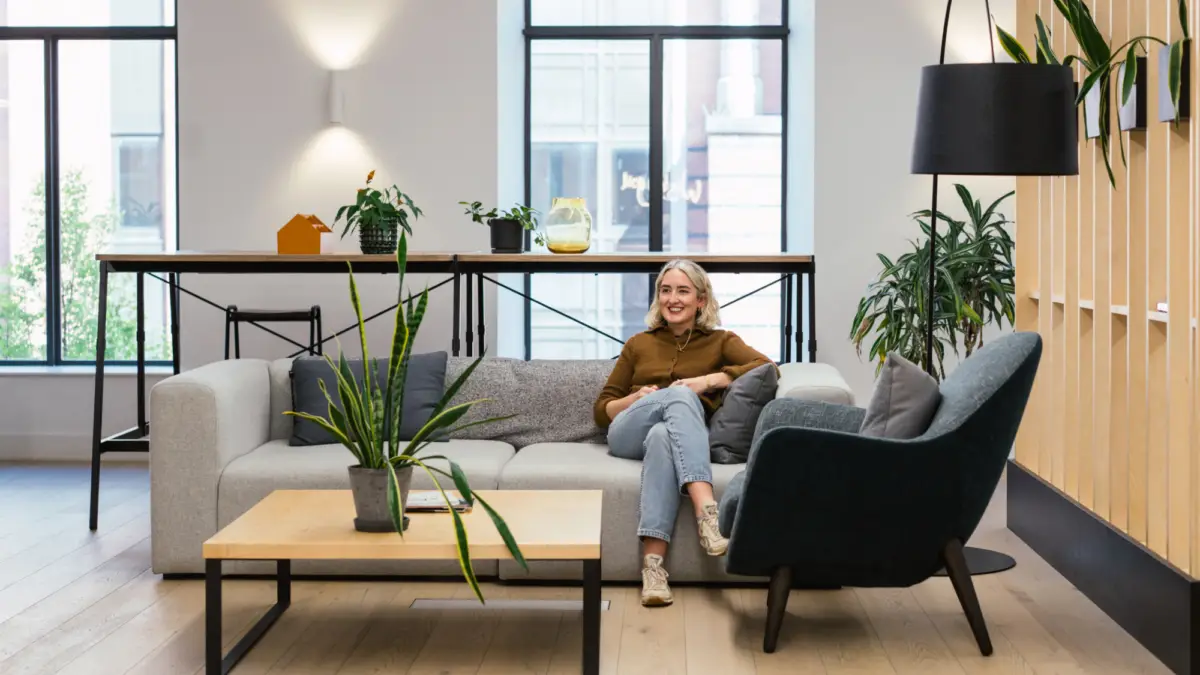

A career in software engineering wasn't always part of Rosa Downings' plan. From studying film and working abroad to becoming a developer passionate about mentoring others; her journey reflects the curiosity, resilience, and adaptability that defines modern tech careers.
Biology was probably my best subject in school, but, you know, at age 18, I chose film – which was my main passion – and ended up studying Film & TV and English Literature at Glasgow University. But within about a month of being there I knew I needed something more objective, something more black and white. I ended up moving to Shanghai for two years. Whilst I was there, I worked in marketing and copywriting, and on one project that the team was working on, we had to write all the copy and redo the branding for one of our products. During that project we worked with the developers on building the site out and deciding what was going to go on each page. It reminded me of the MySpace era, where I got to experiment with HTML, CSS, JavaScript – and I loved it. I was very good at it from age 11 or something, but I didn't really understand what it was I was doing. I didn't do any computer science for my A-levels or GCSEs, just totally dropped it. And then I thought, I really enjoy this, you know, I love the logical aspect to it and the fact it can be very creative too. And then my little brother was studying computer science at Queen’s and I just said to him, do you think I could move into that? With no real background behind me, nothing? And he said, of course Rosa, there are conversion courses out there.
Eight years ago now.
When I did my Masters, I was thrown right into the deep end – I hadn’t even written a full line of code before! I’d only used HTML and the other basic web technologies. It was extremely difficult, we had 11 exams in the course of three weeks, and well over 25 pieces of coursework in one year. This conversion masters was like condensing a four year undergraduate degree into one year. I knew I had to prove myself, and it was so hard, but I got through it in the end and even ended up getting a distinction. I was clueless at the beginning of my career and I was so eager to get my first graduate software job because I'd been working in a pub for years supporting myself. I took the first job that was offered to me and it wasn’t the right job. I knew in the interview it wasn’t right for me. The job ended up proving that to me, and solidifying that I was in the wrong place. If I looked back, I would say to that girl, just take your time, work another couple of months in the pub, it's not going to kill you and, you know, the right thing won’t pass by you.
Exactly!
Following on from that, what drew you towards working at Instil?
I'd been living in Glasgow since 2009 with the exception of a few years in Shanghai and summers in America. So when I came back, I didn't know any of the companies people kept throwing out there, like Kainos and Rapid7 for instance – I was completely new to the job market here. Whilst looking for a job I was on LinkedIn and saw some contacts that followed Instil. I went on the website, saw a role come up, and thought to myself, that place looks cool. I asked someone in the industry, what’s that company Instil like? They mentioned that Tara is very well known in Belfast for being extremely nurturing of young talent, and that the company does loads of events and that it was known to be a really good company. So yeah, I bit the bullet and applied! I had an interview with Áine and Sean and immediately liked their vibe, and soon after met Peter Ruck – Head of Talent Acquisition at Instil – and he was brilliant too. The whole process was really quick and seamless, and I’d been looking for jobs for like a month, I think. It had been a series of prolonged processes or not hearing back at all. With Instil, it all kicked off in the matter of a week and a half, which was brilliant, and so reaffirming for me that I’d made the right choice.
I think you have to be very astute and figure out if people actually understand what's being asked of them and try to infer, though they mightn’t feel comfortable to admit it. It’s my job if I might notice that things are taking a little bit longer to step in and be like, are you all good? And offer a clarification, offer a helping hand – to gently lead people, and lead with kindness too. Being empathetic and intuitive in the team is a priority for me.
In the current project I’m working on, I find myself constantly asking, what do people need? What could make a user experience better? One of the big things is accessibility, so for this current project we’re thinking about that a lot. So the current version of this website that is live, is a legacy piece of software. It has some accessibility features, but not the full suite. So we obviously want this to be the most modern product, like the one-stop shop for any sort of client to come to. It's asking ourselves how we are going to differentiate the product on the market, thinking outside of the box, and then going that extra mile.
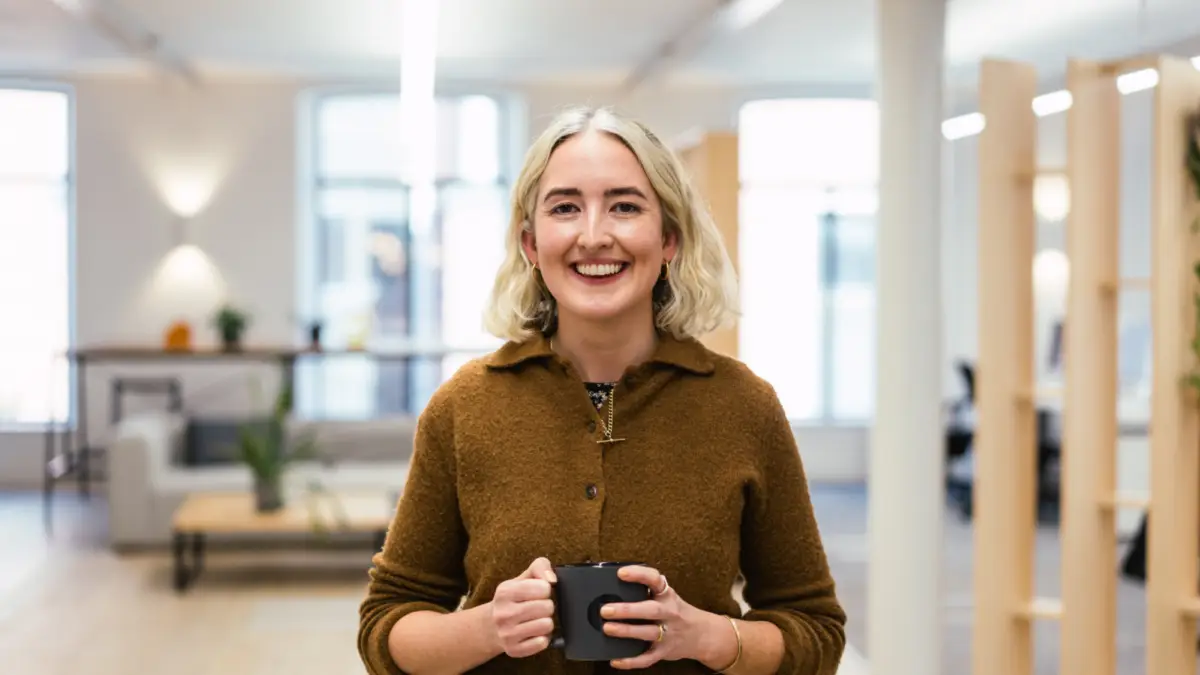
I started my training on one team and then got shifted to another one after like two weeks and then it got shifted again. But that is the nature of consultancies and I'm from an agency background, which is very similar. So that, you know, where you have to change gears, I'm actually quite used to it. It can be difficult when you've just joined a company and you're trying hard to get up to speed and then it shifts in direction early on when you're just feeling comfortable. I’m definitely more equipped to deal with it now. I’m more hardened – hardy and tough!
In my previous role, I was solely responsible for the juniors, and I do get a huge amount of satisfaction from that. And especially seeing female developers grow. It can be an intimidating and male-dominated field where the balance still isn't quite there. That, and I know what it feels like as a female in the industry myself. I’m also a person that needs a lot of detail, I need context and explanation. Why are we doing this? So I really need people to communicate. And a lot of the time you don't get that. You get little nuggets, and then you are expected to piece it all together. And whenever I'm like ever dealing with juniors I definitely try and make it all extremely clear. You get a full visualisation of what they're doing, why they're doing it, and how it's going to be utilised.
It's really flattened out the landscape in terms of our ability to build things. Previously, you'd have to have years of experience or commit many non-work hours to get up to speed with a certain language. Now we can develop in any language we want, and through reviewing AI written code, we are still learning. So it may be written in TypeScript, which I had never done before, but I'm reviewing everything that it's written. So you're doing your TypeScript courses, but on the job. Probably one of the big challenges is the amount it produces. It's producing so many lines of code. Like this morning I had a pull request. I had a colleague, send over this pull request that had 54 files in it and some of the files had hundreds of lines of code – hundreds – and we have to review that and approve it or not approve it. There's so much more reading in this job now where there wasn't before. it's not as seamless. You really have to work with it and you have to be careful and read, a lot.
Yeah! I've been doing a lot of demos recently with our, in our team. There's a big kind of emphasis on sharing because we're all producing way more than normal with AI. Getting something to work how you wanted, is why I kind of got into this career in the first place, because that feeling of trial and error and tweaking and then having it work really is class. We've also been working on research at the minute and I've been looking into how to get headers and footers on these documents, working in a really intuitive way and finding gaps with performance and functionality between different tools. I've actually been really enjoying it and yeah, doing lots of demos along the way which has been good.
It’s been very supportive, and full of lovely people. Like Patrick is the team lead, and principal engineer and you can trust him totally that he has everyone's back. Patrick's always leading by example, always aiming for best practice all the time. So he's a really inspiring person to have leading the team.
Very welcoming, and excellent onboarding – I’m so lucky!
Well, my toxic trait is my love of star signs. I’m a Gemini (you can keep that in!) I have already immediately started trying to identify what everyone is, so maybe that is everyone’s biggest workplace ick about me!